

What is synesthesia?
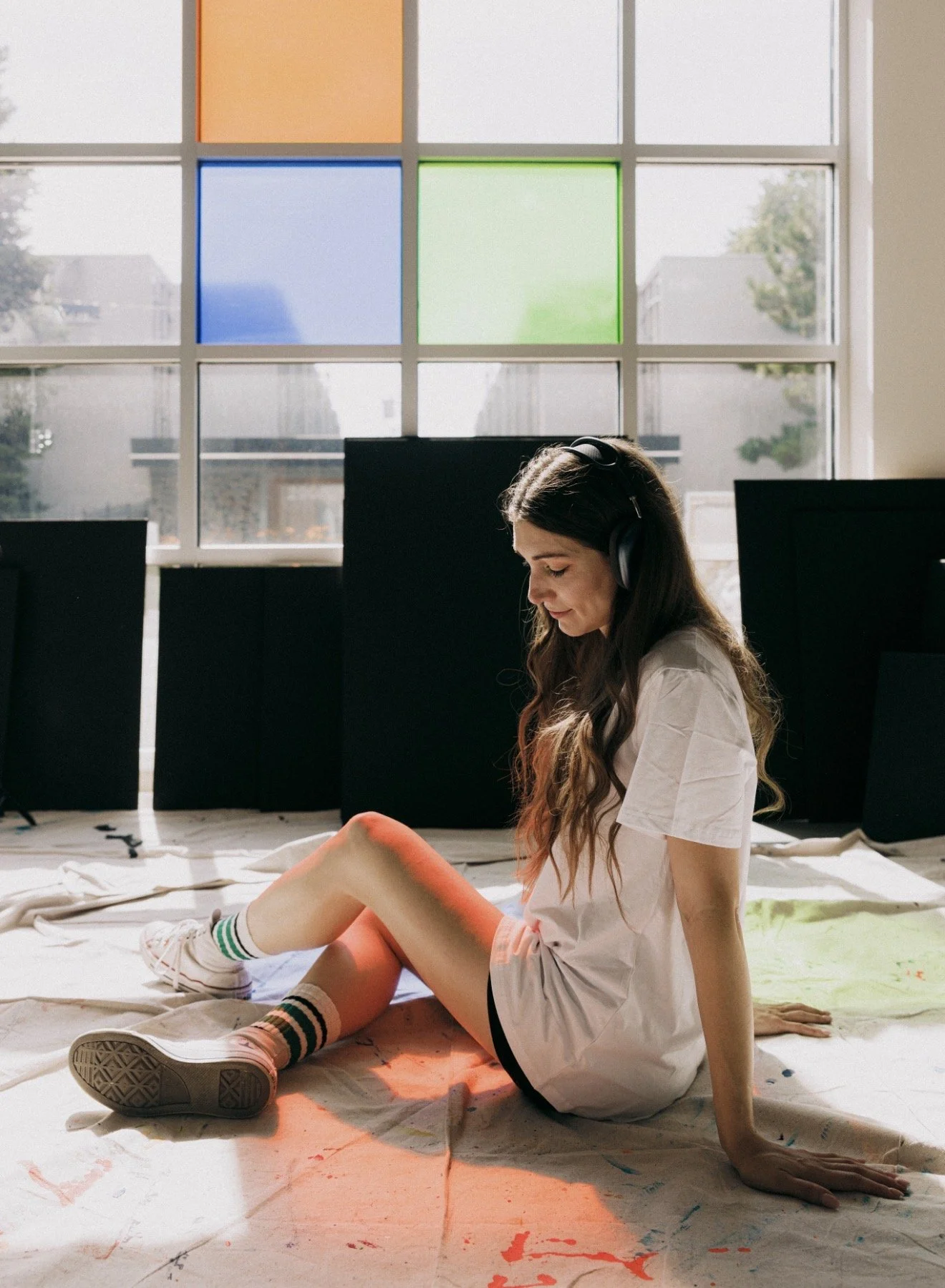
Synesthesia is a neurological phenomenon in which the brain naturally links different senses. For artist Sarah Kraning, music is experienced not only as sound, but also as vivid color, texture, and movement. Rather than imagining these visuals, she perceives them automatically and intensely, using them as the foundations for her artwork.
Synesthesia is estimated to affect approximately 1–4% of the population and is not considered a disorder. Instead, it offers researchers valuable insight into how the human brain processes perception, creativity, and the connections between the senses.
To learn more about the science of synesthesia, visit the:
Frequently Asked Questions
-
Synesthesia is not a disease or disorder, though it may result from brain injury in rare cases. Most often, synesthesia is hereditary, or runs in families.
While synesthesia is not considered to be a disorder or disability, it is can be quite overstimulating and may require special acommodations. Teachers, friends, and family may help the synesthete by being sensitive to their sensory needs, as these are often heightened. For example, a synesthete may have a particular sensitivity to certain sounds, crowded places, or environments.
-
Synesthesia is thought to affect approximately 2-5% of the world. This is about as common as being born with red hair.
Some research suggests that perhaps everyone was born with synesthesia, but that these neural connections were pruned away for most.
-
There have been over 80 different types of synesthesia identified to date. Senses can be crossed in many different ways! Below are a few common types:
Chromesthesia or sound-to-color synesthesia: Sounds, such as music or voices, trigger the perception of colors. For example, a specific musical note may consistently appear as the color blue.
Auditory-Tactile synesthesia: Sounds elicit specific texture sensations. For example, the sound of screeching tires might feel sharp.common formsmight appear as green.
Lexical-Gustatory synesthesia: Words or sounds evoke specific tastes or flavors. Hearing the word "apple" might be experienced as actually tasting an apple.
Spatial-Sequence synesthesia: Sequences, like numbers or days of the week, are perceived as having a spatial layout. For instance, someone might see numbers as arranged in a particular pattern in their mind's eye.
-
Wassily Kandinsky (painter)
Billie Eilish (musician)
Vincent Van Gogh (painter)
Sarah Kraning (painter)
Pharrell Williams (musician)
Lorde (Musician)
Billy Joel (Musician)
Jack Coulter (painter)